Everything Calgary and Saskatoon Homeowners Need to Know About Home Roof Replacement
Home roof replacement is one of the biggest decisions you'll make as a homeowner.
It is a high-cost, high-stakes project, and most homeowners have little personal experience to draw on.
You don't know which warning signs to take seriously. You don't know whether your damaged roof needs a full replacement. And you don't know which contractor to trust with tens of thousands of dollars.
What if the contractor you hire takes your deposit and goes quiet? What about the quote that starts at one number and doubles by the time the crew leaves your driveway? What if your new roof looks flawless in October, but leaks in March?
Many homeowners face exactly these problems. But they can be avoided as long as a homeowner knows what questions to ask, what red flags to watch for, and what a professional roof replacement actually looks like from start to finish.
This guide changes that. By the time you're done reading, you'll know how to evaluate your roof's condition, understand what replacement costs actually include, choose the right materials for a Canadian climate, and identify a contractor you can trust with a significant investment.

What Is a Full Roof Replacement — And When Do You Actually Need One?
Understanding the difference between a repair and a full replacement — and knowing when your existing roof has crossed that line — is the first decision that matters.
A repair targets specific, localized problems. Missing shingles after a windstorm. A flashing gap around a chimney. These are appropriate solutions when the structure is sound and the damage is contained. If damage covers less than 30% of your roof, repairs typically give the best value.
A full replacement is a different scope entirely.
It means stripping every layer of old roofing — old shingles, underlayment, waterproof barriers — down to the roof deck, inspecting and repairing the structural foundation, and installing new materials from scratch. Full replacement becomes the only viable path when the roof's systems have deteriorated beyond what any targeted repair can address.
The clearest sign you've crossed that line: repairs keep recurring in different areas. That's not isolated bad luck. That's a failing system.
Full Roof Replacement vs. Repair: The Real Distinction
Repairs fix problems. Full replacement restores protection.
When materials have degraded system-wide — when granule loss, curling shingles, and cracking appear across multiple sections — no amount of patching extends the roof's life in any meaningful way. Trying to patch widespread damage often leads to endless repairs as problems keep spreading.
Your Roof's Age Is the Primary Decision Factor
The roof's age is the single most reliable indicator of whether replacement is needed.
Asphalt shingles — the most common roofing material across Calgary and Saskatoon — have a functional lifespan of 20 to 25 years. Once your existing roof crosses that threshold, the materials have degraded at a structural level, regardless of how things look from the street.
Surface appearance at this stage is not a reliable indicator of structural health. The degradation is happening in the asphalt chemistry, in granule adhesion, in shingle flexibility. These are system-wide changes that cannot be isolated or selectively repaired.
.png)
Insurance implications follow the same logic. The roof's age directly influences what coverage is available and how a claim is assessed. A roof past 20 years is assessed differently — and usually less favourably — than a younger system.
A qualified inspection on a roof past 20 years will almost always confirm that full replacement is the most cost-effective path forward. Not because inspectors default to the larger job, but because the math doesn't support anything else.
Signs Your Roof Has Reached End of Life
Your roof doesn't fail all at once. It sends signals first — some visible from the ground, others developing quietly in your attic.
Catching those signals early is what separates a planned, budgeted replacement from an emergency project after a bad storm. When you spot several warning signs together, get professional help quickly.
Visible Signs on the Surface
Curling shingles are one of the clearest indicators of advanced aging.
When shingles curl at the edges or cup across their surface, the asphalt has dried out. The shingle is no longer lying flat against the roof deck, which creates gaps where wind and water can penetrate freely.
Curling shingles appearing across multiple sections signal system-wide deterioration, not a local problem.
Missing shingles in more than one location indicate that materials have lost bonding strength across the whole roof. A single missing shingle after a windstorm is an event. Missing shingles in three different areas is a pattern.
Cracked shingles spreading across large sections indicate advanced aging — the existing materials hardening and breaking down at a structural level. This is not a wear that can be patched.
Granule loss deserves particular attention. The granules embedded in shingles protect the asphalt from UV damage and physical impact. When they shed at scale — visible in your gutters or collecting at the base of downspouts — the asphalt beneath is exposed, and the aging process accelerates significantly.
Signs Inside Your Home
Water damage appears as dark spots or stains on ceilings, along with peeling paint and bubbling wallpaper. These interior signs are almost always secondary to a moisture problem that's been developing longer than you'd think. Visible damage like missing or curling shingles can let water and pests get inside long before those interior signals appear — which is why surface inspection matters.

Check your attic after heavy rain. Active moisture, staining on rafters, or daylight visible through the roof deck means replacement is no longer optional.
The Roof Replacement Process: What Actually Happens
The roof replacement process begins with a thorough inspection — assessing the surface materials, underlayment, roof deck, and flashing at every penetration point. What's found during inspection determines the full scope of the project.
Tear off comes next. The old shingles and any multiple layers of previous roofing material are stripped completely, exposing the roof deck for direct assessment. This is where problems that weren't visible from the surface get identified — soft spots, moisture damage, compromised decking.
Any necessary roof deck repairs happen before new materials go down. Skipping this step is one of the most common ways a new roof underperforms from day one. Proper installation of the new system starts with a solid foundation.
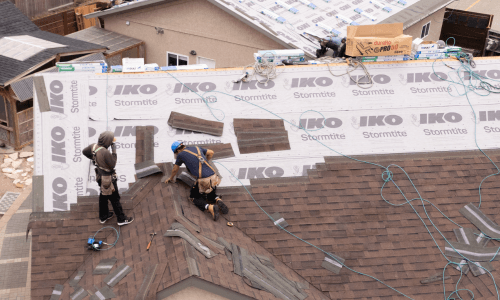
Then new materials are installed in sequence: underlayment, shingles, flashing at every valley and penetration, and ventilation components. When everything is installed correctly and in the right order, the new roof performs at its rated lifespan. Proper installation is what qualifies that performance for full warranty coverage.
At SW Roofing, the entire process — tear off, deck inspection, new material installation, and full site clean-up — is completed in a single day by in-house crews. No subcontractors. The same standards of workmanship and accountability apply to every project, on every site.
Choosing the Right Roofing Materials
The material you select determines how long your new roof lasts, how well it performs in Canadian weather conditions, and how much value the investment delivers over time. In Calgary and Saskatoon, climate resilience isn't optional — it's the baseline requirement. Hail, heavy snow, extreme cold, and strong UV exposure place real demands on roofing materials that simply don't apply in milder climates.
The right choice depends on four factors: climate performance, budget, durability, and energy efficiency. Each material makes different trade-offs across those four areas. Understanding those trade-offs is what allows you to make a decision based on long-term best value — not just the lowest number per square foot.
Asphalt Shingles — The Most Popular Choice
Asphalt shingles account for the majority of roof replacement projects in Calgary and Saskatoon. They offer a proven combination of affordability, weather performance, and availability that no other material matches at the same price point. Asphalt shingles are the cheapest roofing material option that still delivers reliable performance in Canadian conditions, which makes them the practical choice for most homeowners.
Within the category, there are two primary options: 3-tab and architectural shingles.
3-tab shingles are the entry-level option — the most affordable option per sq ft, with a lifespan typically in the 15 to 20-year range. They work, but they offer less dimensional depth, less impact resistance, and a shorter service life than architectural shingles.
Architectural shingles are thicker and more durable than standard asphalt shingles, providing better protection against harsh weather. They carry a longer rated lifespan, better hail resistance, and a more substantial visual profile.
For most homeowners doing a full roof replacement with plans to stay in their home, architectural shingles deliver better value at only a modest cost increase.
Metal Roofs — A Premium Long-Term Option
Metal roofs occupy the premium end of the residential roofing market. They carry a higher upfront replacement cost, but metal roofs can last between 40 and 70 years with proper maintenance — significantly longer than any asphalt option. That lifespan changes the long-term math considerably.
For Calgary homeowners in particular, metal roofs carry a performance advantage that matters: superior resistance to hail damage. In a market where storm damage is a recurring reality, the durability profile of metal is a legitimate factor in the value calculation.
Metal roofs also offer measurable energy efficiency benefits. Metal reflects solar radiation rather than absorbing it, which reduces summer cooling loads and lowers energy costs over time.
Professional installation by a contractor with certified metal roofing experience is not optional. Improper installation eliminates the performance and longevity advantages the material is designed to deliver.
SW Roofing's Trusted Material Brands
SW Roofing works with a curated set of brands selected for performance, warranty strength, and suitability for Canadian conditions. Contractor matters — which is why certification across every brand in the lineup is non-negotiable.
IKO is one of the most established asphalt shingle manufacturers in Canada. SW Roofing is a certified IKO installer. Every roof installed with IKO products qualifies for IKO's Limited Lifetime Warranty — one of the strongest manufacturer warranties available in the residential category.
Malarkey produces high-performance architectural shingles focused on impact resistance. Their products are a strong fit for hail-prone markets like Calgary.
Euroshield manufactures rubber roofing products made from recycled materials. Their products carry Class 4 impact resistance ratings and are extremely durable in harsh weather — a premium option for homeowners seeking long-term performance beyond standard asphalt.
Decra produces stone-coated steel roofing — combining the aesthetics of traditional shingles with the structural strength of metal, and carrying strong warranty coverage built for demanding Canadian conditions.
Understanding Roof Replacement Cost
Roof replacement cost is the number most homeowners want first — and the number that's hardest to pin down without a professional assessment. The average cost to replace a roof in Canada usually falls between $5,000 and $15,000, though replacement costs vary widely based on factors specific to each home.
Roof size significantly affects replacement costs — larger roofs require more materials and labour. The roof's slope matters too: steep roofs require additional safety measures and increase labour costs. Material selection drives the per sq ft cost. And the condition of the roof deck, only fully visible after tear off, determines whether additional costs are required before new materials can go down.
Labour costs typically make up 40 to 60% of the total replacement cost. That's the portion most directly affected by who you hire. A crew that works efficiently, completes the project in a single day, and doesn't require multiple return visits keeps labour costs predictable.
General estimates for asphalt replacement run between $3,000 and $10,000 for a standard residential roof. Metal replacement costs more upfront — but the longer service life changes the long-term calculation. The final bill for a roof replacement includes not only materials and installation but also removal and disposal of old shingles and any existing underlayers, which can add $1,000 to $3,000 to the total.
Insurance Coverage for Roof Replacement
Home insurance typically covers roof replacement when damage is caused by a covered peril — storms, hail, or falling trees. Storm damage from sudden events is generally claimable. General wear and tear is not.
Insurance coverage for roof replacement may be limited if the roof is older than 20 years. Insurers often require homeowners to specify the roof's age when assessing coverage — and a damaged roof on an aging system is assessed differently than a younger one. Home insurance may cover only a portion of the replacement cost if the roof was already in poor condition at the time of the damage.
To ensure a successful claim, document your roof's condition before damage occurs and report damage promptly after severe weather. Claims may be denied if damage is attributed to neglect or improper maintenance.
SW Roofing's HAAG-certified inspectors provide professional assessments that document condition accurately — which matters both for insurance claims and for understanding what your project actually requires.
How SW Roofing's Transparent Pricing Works
Transparent pricing means the number on your quote is the number on your invoice — not a starting point that drifts upward once the crew has already started tearing off your old roof.
SW Roofing operates on a no-hidden-fees basis. Every cost is itemized and explained before work begins. If additional deck repairs are needed once old materials come off, SW Roofing documents the damage with photographs and presents a clear price before any additional work proceeds. No surprises. The final cost is the agreed cost.
Extend Your Roof's Life with GoNano Asphalt Shingle Treatment
Not every homeowner facing a deteriorating roof needs a full replacement right now. Some roofs have years of serviceable life remaining — they just need the right intervention to slow the aging process and preserve what's there.
GoNano Asphalt Shingle Treatment is an advanced nanotechnology-based treatment sprayed directly onto your asphalt shingles. Unlike traditional sealants or surface coatings, GoNano penetrates the shingle and bonds nanoparticles to the chemical structure within the material — strengthening it from the inside out. It doubles hail resistance, retains 80% of granules over 15 years, creates a hydrophobic seal that repels water and reduces ice damming, and provides UV and wind protection.
GoNano comes in two formulations. NuRoof Fortify is designed for new roofs — zero to five years old. Applied while shingles are still fully intact, the nanoparticles penetrate at maximum depth, delivering the strongest possible bond. NuRoof Revive is formulated for roofs in the five to fifteen-year range — restoring shingle flexibility and slowing the aging process as materials begin to show wear.
GoNano costs approximately 30% of a full roof replacement. For a homeowner whose roof is structurally sound but aging, that cost difference is significant. Instead of committing to full replacement costs now, a GoNano treatment extends the roof's serviceable life by 5 to 15 years — giving you time to plan and budget on your own terms rather than under pressure.
Proper Maintenance After Roof Replacement
A new roof from quality materials, installed by a qualified crew, will still underperform its rated lifespan if the system around it is neglected. Proper maintenance is what closes the gap between what a roof is designed to deliver and what it actually delivers over its lifetime.
Your roof system is more than the shingles on the surface. It includes the underlayment, the deck, the eavestroughs, the soffit and fascia, and the attic ventilation beneath it all. These components work together. When one is neglected, the others absorb the consequences.
Eavestrough cleaning prevents water from backing up at the roofline. Blocked eavestroughs cause pooling at the roof edge, which works its way under shingles and into the underlayment. Clean them at a minimum twice a year.
Soffit and fascia inspection catches early moisture damage before it becomes structural. Cracked, warped, or rotting fascia boards indicate water isn't draining cleanly through the system.
.png)
Attic ventilation is one of the most underestimated factors in roof longevity. A poorly ventilated attic traps heat in summer and moisture in winter. Proper ventilation is crucial for maintaining a healthy roof and preventing moisture buildup — summer heat accelerates shingle aging from below, shortening the roof's lifespan regardless of material quality.
Water damage appears as dark spots or stains on ceilings. If you see those signs, don't wait. Regular inspections — once per year and after significant weather events — catch issues early before they cause major damage. Removing debris after storms prevents moisture accumulation and mold growth, both of which accelerate aging across any roofing material.
Why the Right Contractor Matters More Than Anything Else
You can choose the best roofing materials on the market and still end up with a roof that underperforms, leaks early, and voids its manufacturer's warranties — if the installation is wrong. Contractor matters are not a platitude. It's the variable that determines whether everything else works.
When selecting a contractor, verify they are licensed, insured, and certified by the material manufacturers whose products they install.
Licensing confirms legal accountability. Insurance — including liability and WCB coverage — protects you if something goes wrong on your property. Manufacturer certification confirms that professional installation standards are met and that the warranty on your materials is actually valid.
.png)
The no-subcontractor model is a meaningful differentiator. When a roofing company uses subcontractors, accountability becomes diffuse. The company you hired and the crew doing your roof are different entities — and quality control, cleanliness, and communication vary accordingly. SW Roofing uses only directly employed, in-house crews. No subcontractors on any project.
Ask about experience specifically with the materials you're using and the conditions your roof faces. In Calgary, that means experience with hail damage assessment. SW Roofing's HAAG certification is the industry standard for that expertise.
And ask what the warranty actually covers. SW Roofing backs every roof replacement with a 10-year workmanship warranty. IKO's Limited Lifetime Warranty covers the materials. Both are confirmed in writing before work begins.
Planning a home roof replacement means selecting durable materials suited to your climate, budgeting for potential structural repairs, and hiring a certified contractor. Every one of those decisions matters. But the contractor decision is where all the others either hold or collapse.
Choose The Right Contractor For Your Roof
Home roof replacement is a significant investment, and the outcome depends almost entirely on who does the work. The right contractor shows up on time, uses quality materials, completes the job in a single day, charges exactly what they quoted, and stands behind the result with a warranty that means something.
That is not the industry standard. That is the SW Roofing standard.
Whether you need a new roof in Saskatoon, are dealing with storm damage in Calgary, or are simply planning for a project you want done right the first time, SW Roofing delivers every project with transparent pricing, in-house crews, and a 10-year workmanship warranty covering every nail from start to finish.
The first step costs nothing. SW Roofing offers a free estimate with a professional on-site inspection completed within 24 hours of contact. You get a clear, itemized quote with no hidden fees and no pressure — just an accurate picture of what your roof replacement involves and what it will cost.
Get your free estimate today and find out why 5,000 Calgary and Saskatoon homeowners have trusted SW Roofing with the roof over their heads.
Frequently Asked Questions
How long does a roof replacement take?
Most roof replacement projects are completed in a single day. SW Roofing's in-house crews handle tear off, deck inspection, new material installation, and full site clean-up within one working day. Larger or more complex roofs may require additional time, but the timeline is always confirmed before work begins.
What warranties does SW Roofing offer?
SW Roofing backs every roof replacement with a 10-year workmanship warranty covering all installation-related issues. Homeowners also receive the IKO Limited Lifetime Warranty on all IKO asphalt shingles. Both are confirmed in writing before the project starts.
What is GoNano, and how does it benefit my roof?
GoNano Asphalt Shingle Treatment penetrates your asphalt shingles and bonds nanoparticles to the chemical structure within the material — strengthening it from the inside rather than coating the surface. It doubles hail resistance, retains 80% of granules over 15 years, creates a hydrophobic seal that repels water and reduces ice damming, and extends serviceable life by 5 to 15 years.
Does SW Roofing use subcontractors?
No. SW Roofing uses only directly employed, in-house crews on every project. The same standards of workmanship, cleanliness, and accountability apply to every job.
What services does SW Roofing offer beyond roof replacement?
SW Roofing is a full exterior services company. Beyond roof replacement, the team installs eavestroughs, soffit and fascia, and siding — including vinyl and James Hardie products. Every roofing service follows the same process: free on-site assessment, transparent pricing, expert installation, and a thorough final walk-through.
What does roof replacement cost in Calgary or Saskatoon?
Replacement costs vary based on roof size, material selection, the roof's slope, and the condition of the deck. The average cost to replace a roof in Canada falls between $5,000 and $15,000. SW Roofing provides a free, itemized quote with no hidden fees — so you know the full cost before any work begins.